I Don't Miss Family Parties
· This piece is also available in Polish
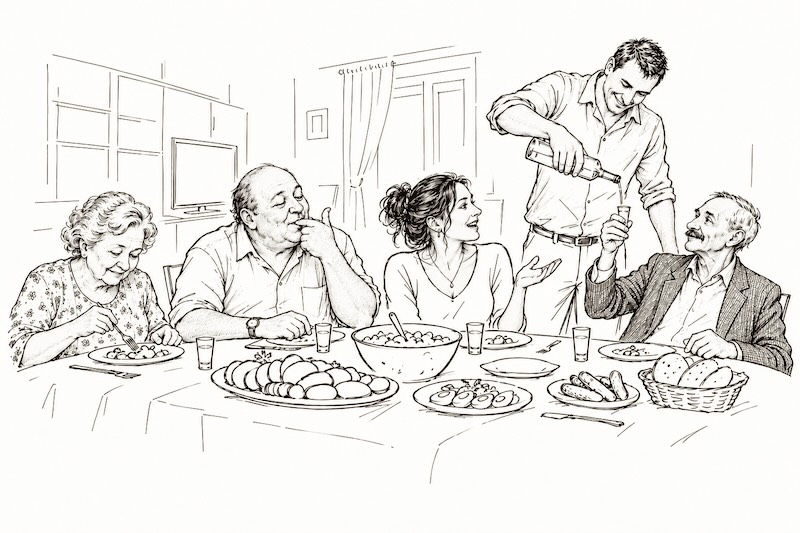
(…) typical Polish name day parties, plain old drinking sessions
Thinking back, I’ve been to all kinds of parties: typical Polish name day partiesA Polish custom of celebrating the feast day of one’s given-name saint, often as big as a birthday. , weddings, plain old drinking sessions, family reunions at Christmas, funeral wakes, etc.
Everywhere, and I mean absolutely everywhere, and always, the vodka flowed.
Polish parties don’t exist without vodka.
I don’t know if it’s a matter of the family you grow up in, but I remember boozy parties with friends completely differently from drinking with family, especially those gatherings that included the older generation (that is, my parents’ generation). The thing is, those older partygoers always found some reason to fight — if it wasn’t politics, it was religion, or who’s more and who’s less important in the family.
When my mom died, my relationship with my father cooled (not that it had been all that warm before — oh, no). And at some point my wife and I came to the conclusion that we simply don’t enjoy driving out to see people among whom we don’t feel comfortable — so we stopped going, first to name day parties, then to the get-togethers for All Saints’ DayIn Poland, 1 November is a major holiday of visiting cemeteries, followed by family meals. (because the tradition of meeting at cemeteries and then at the table, the whole family, is still going strong in Poland), and finally we stopped going for Christmas too.
After each such step of eliminating these family parties, we felt our life was getting a little bit better — so we’d usually take the next step afterwards: it wasn’t, then, an abrupt severing of family ties, but rather the elimination of all those elements that clashed with our values or our lifestyle.
Or were just plain toxic, both mentally and, quite directly, for our livers.
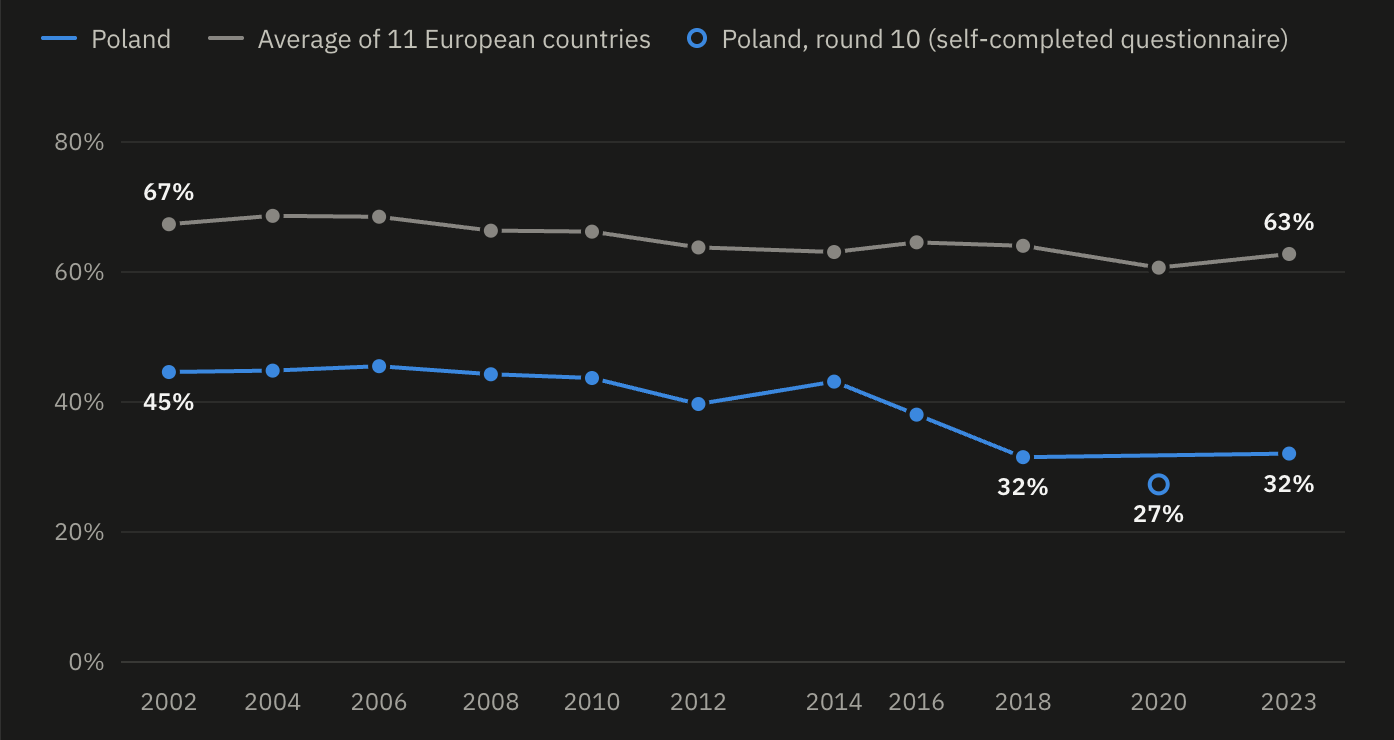
And you’re probably wondering — why the hell am I writing about this? Well, it turns out that once again, within the lifetime of a single generation, there’s a big shift going on in how people approach parties: first of all, yesterday I found out that Poles have ended up among the least-drinking nations in Europe. Only Lithuania drinks less.
Poles are giving up drinking? WTF?
The Graciously Reigning Government of Poland is of course probably worried about this trend, because “by the end of June 2026 it had collected PLN 3.9 billion in excise tax on spirits, whereas a year earlier it was PLN 4.5 billion”. I’d bet their answer will be to raise taxes.
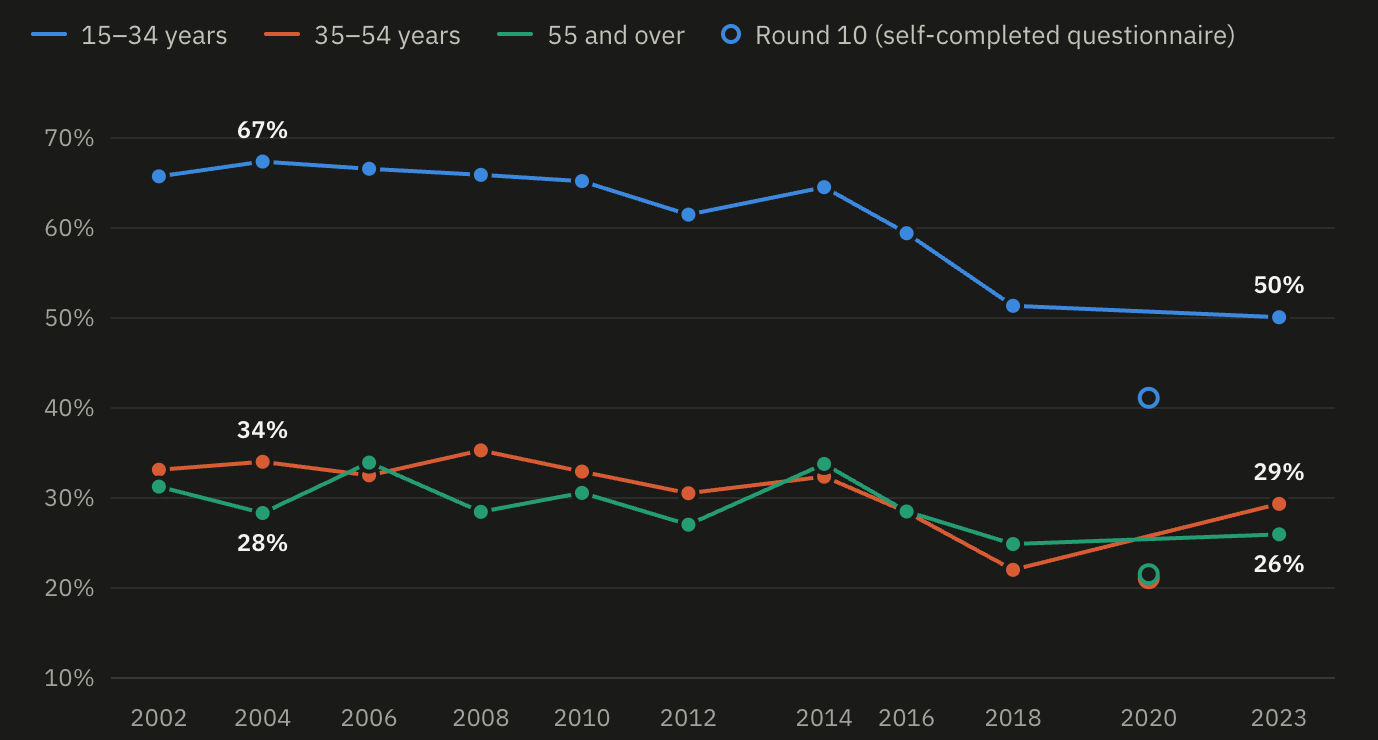
But those aren’t even the most interesting discoveries: it turns out that if you dig into the European Social Survey data, you can pull out the following changes in Poles’ approach to social life:
- the share of people meeting at least once a week in the 15-34 age group fell from 67.4% in 2004 to 50.1% in 2023
- the decline in socializing is the biggest in Poland (among the 18 European countries compared between 2015 and 2024) and comes to -11 percentage points
- until 2010-2011 the share meeting weekly was fairly stable, and then it started to fall — so it isn’t (as some might postulate) a matter of the pandemic having ruined relationships, COVID19 and all that
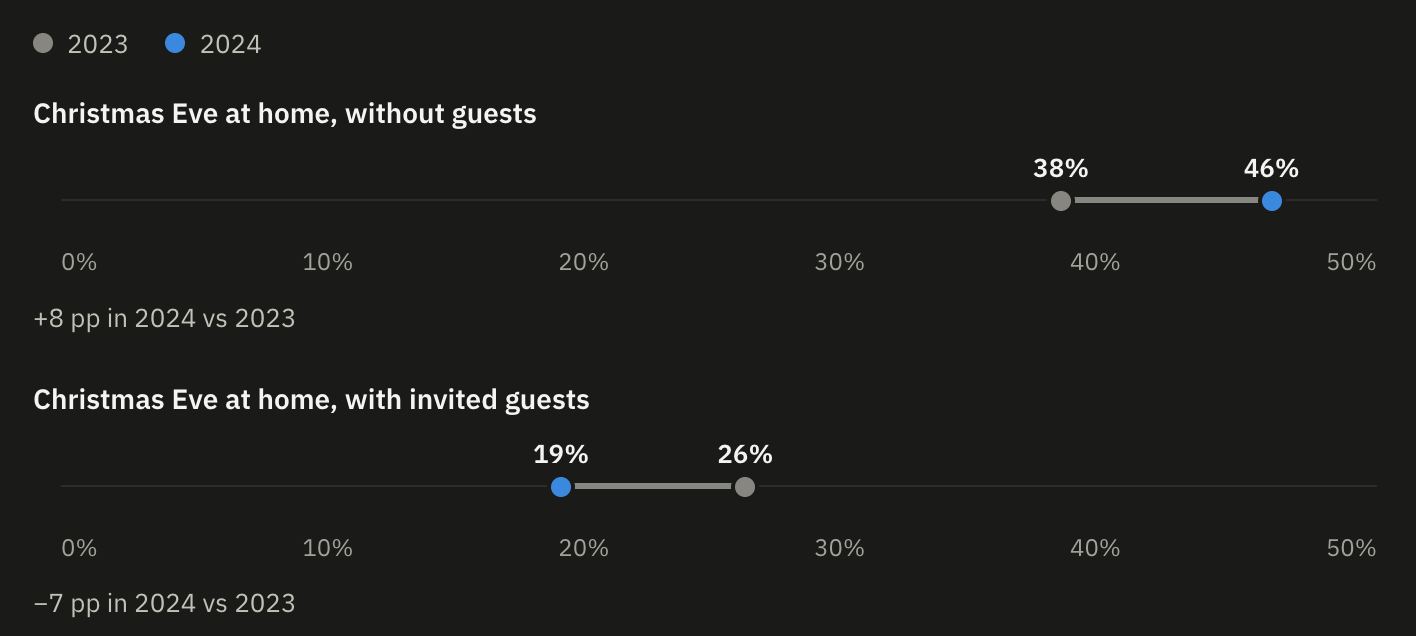
Another study (Christmas EveIn Poland the main Christmas celebration is the Christmas Eve supper 2023 vs 2024, AriadnaSurvey conducted 6–9 December 2024, online panel, nationwide random-quota sample, N=1147, adults. ) shows that:
- the share of respondents planning to spend Christmas Eve at home, without guests rose by a full 8 percentage points in a single year: to 46%!
- the share of respondents planning to spend Christmas Eve at home with invited guests fell from 26% to 19% — also in a single year.
So as you can see, I’m not some total outlier: I feel more like a product of my times.
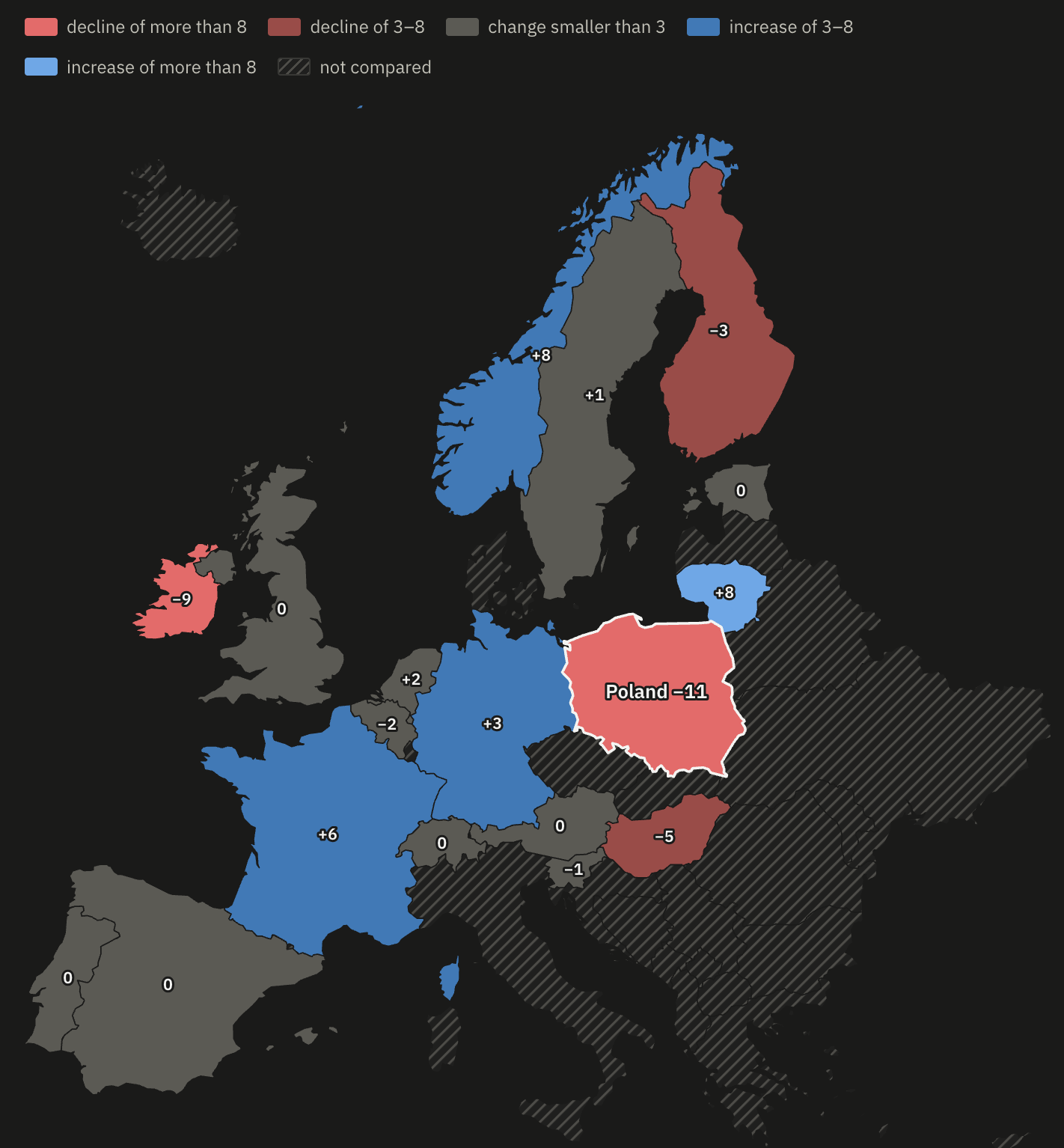
I have to admit, though, that Poland’s position compared with other European countries surprised me. I have no idea what it means, because when I look to the other side of the globe, at the Great Hegemon, I read that American society is also changing in the same direction (but along somewhat different lines):
- Per Derek Thompson and the data he’s collected, Americans have stopped having guests over
- Thompson himself points to 4 causes:
- the fact that wives stopped throwing parties at home and took up careers
- intensive parenting, that is, shifting attention from the circle of friends to one’s own kids
- a shrinking circle of friends
- high-dopamine and very easily accessible screen entertainment.
So what does this mean for the generations to come? What will the world look like in 50 years? Who will be meeting whom, and in what mode?
I have no clue.
What I do know is that I don’t want to lose my relationship with the people closest to me, that is, my sons: I love them very much and I’ll try to make our relationship strong and based on mutual respect for each other’s habits and needs, which may be hard, because old people find it hard to change.
And the times tell us there’s plenty of major change still ahead of us.