USA vs. Poland: The Housing Showdown
· This piece is also available in Polish

Let’s introduce the contenders: Kowalski vs. Smith
Previously on…
Rudolf, feeling poor, wonders what went wrong in his life: he concludes that instead of taking out a mortgage, he’ll seek solace in data: and so off he goes into the crazy world of real estate and salary statistics in Poland and the USA.
Read more: I’m Somewhat Furious
First, let’s introduce the contenders: in one corner stands your average Kowalski, with his average salary and his Polish mortgage.
In the other corner, a typical American: Mr Smith with average earnings (for his county) and a mortgage that’s typical by American standardsWhere do I get the data? USA: Census Bureau, CPS ASEC 2025 (income for 2024), Breakdown by county and ZIP code: ACS 2024; Poland: Eurostat, table ilc_di03 (EU-SILC), 2024 income, Breakdown by “powiat” (baseline): Mikou, Vallet & Guivarch (2024), Harmonized disposable income dataset for Europe at subnational level. .
So: Kowalski is holding his 67,120 PLN (an equivalent of 17,500.31 USD) of disposable income, and Smith his $58,844: meaning that both sums are what’s left after taxes (both federal and state in the case of the USA) and all mandatory contributions (for example: ZUSPolish Social Insurance Institution, which collects mandatory social security and health contributions on the Polish side).
From each of these sums we take one third: that amount is the monthly payment on a 30-year mortgage on both sides. Of course, banks in Poland and the USA don’t treat their customers the same way, so I also took the difference in interest rates into account. I won’t bore you with the details: a mortgage in Poland is more expensive than a mortgage in the United States: over thirty years in Poland you pay the bank back 2.56 times what you borrowed, and in the States over the same period you pay back 2.33 times what you took.
We could wring our hands over the Polish banking sector here (fleecing Poles like a flock of docile sheep), but you know what? I’m not surprised, because Poles are simply a wealthy nation: it turns out that 63% of Poles consider themselves middle class .
So what property does Mr. Kowalski get, and what does Mr. Smith get?My data comes from: GUS BDL, median transaction prices per 1 m² of residential units, 2024 for Poland; Transaction prices for US counties: Redfin Data Center, county market tracker.
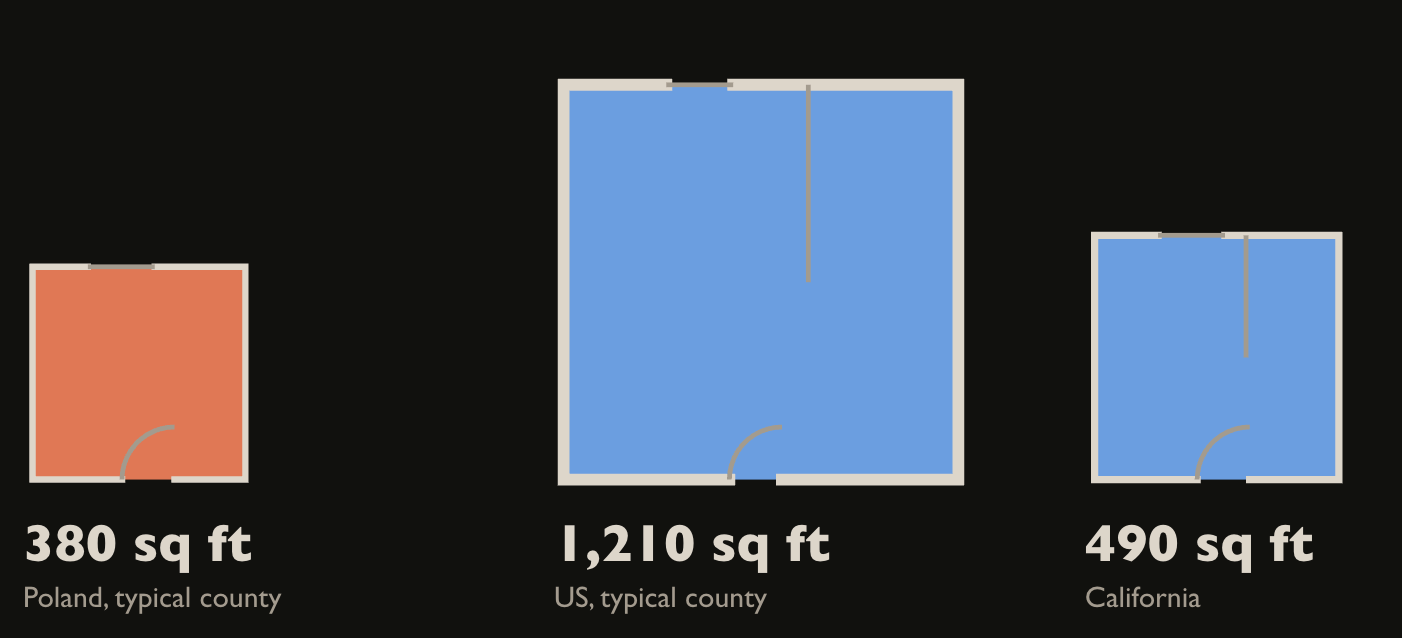
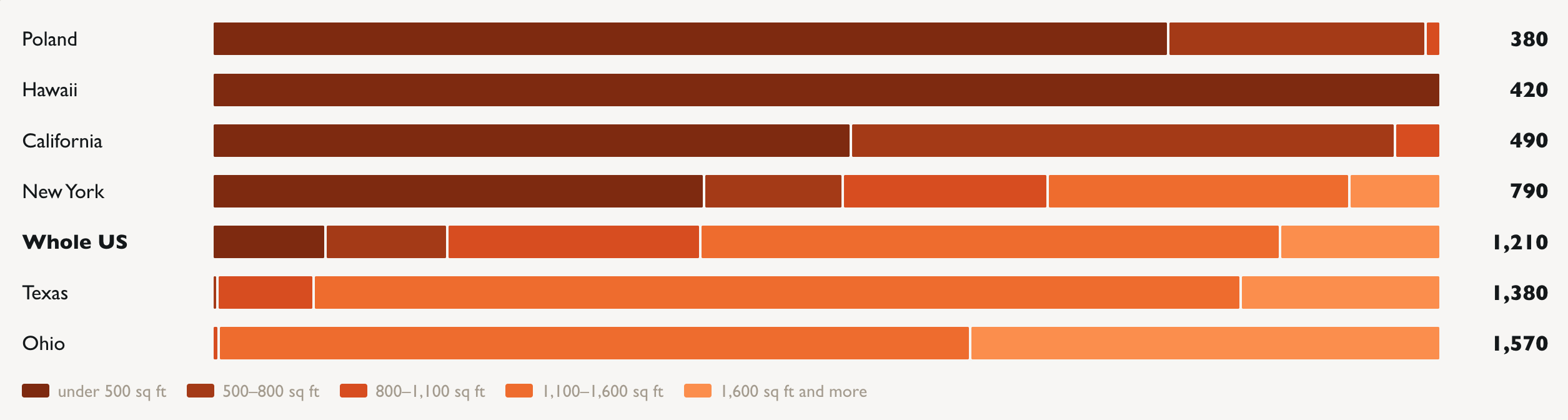
Well, Mr. Smith gets a house with 1,210 sq ft of floor space, Mr. Kowalski an apartment of 380 sq ft.
Is it bad? You bet it is, but the juicy bits of this discussion are still ahead of us!
Let’s get a few things straight: 540 square feet (that’s 50 square meters) in Poland means two rooms plus a kitchen (I live in a 610 sq ft apartment myself, so I know the drill). In the States that size basically doesn’t exist: the average house listed for sale there has 1,700 square feet. The average apartment that actually changed hands in Poland had 570.
Now let’s zoom in on Poland and see where it’s hardest.
Warsaw: is it really that hard?
Because surely, you’ll think (just like I did), it must be hardest in a big city: in a place like Warsaw it must be so bad it’s not even worth talking about.
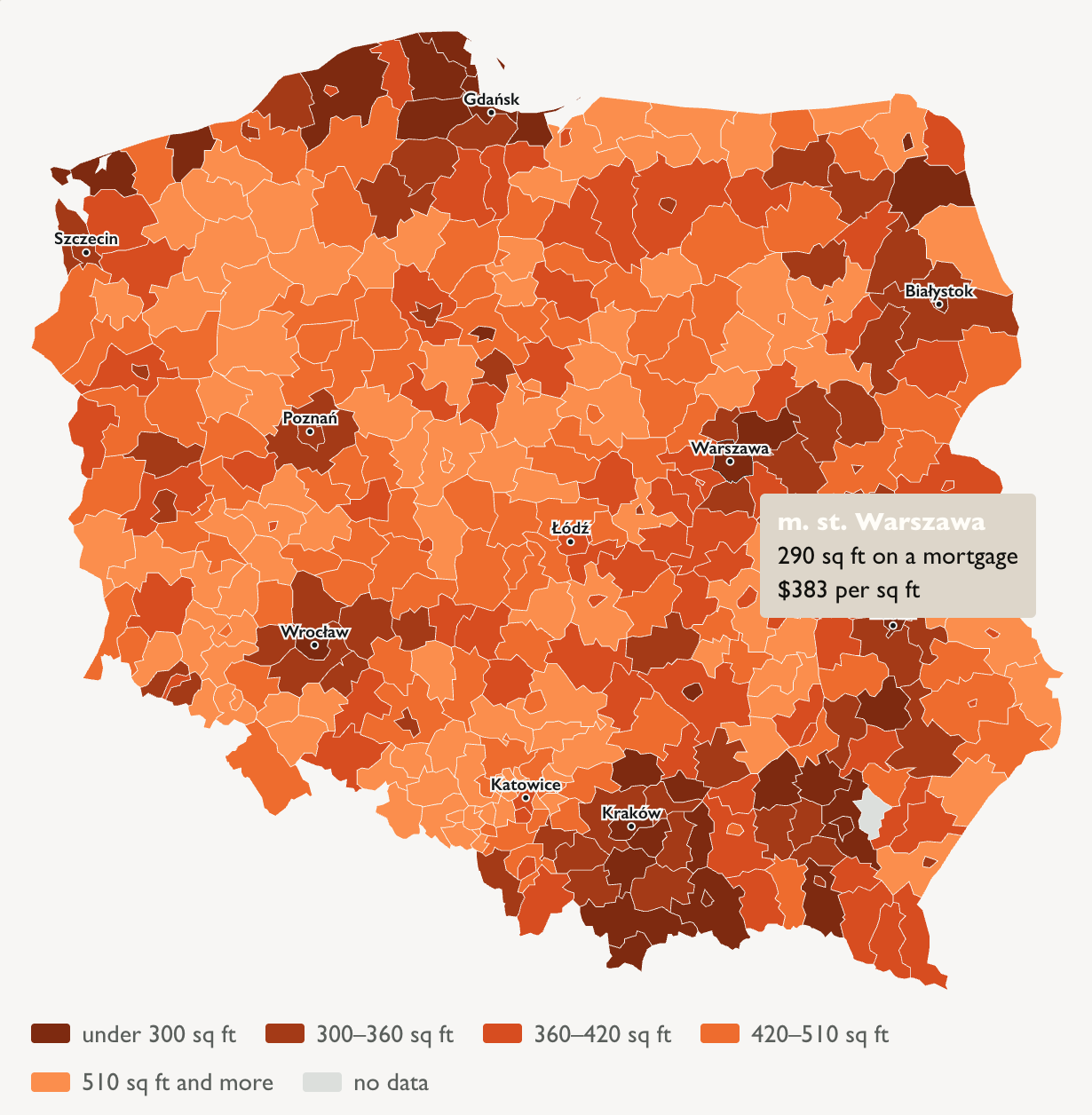
The worst off, as it turns out, are the places where prices are set by someone from outside!
Tatra countya “powiat”, roughly the Polish equivalent of a US county (where Zakopane, famous mountain resort is): 130 square feet. Kamień county (that is, Międzyzdroje and the surrounding area, ie Baltic seaside resort): 160. Sopotan upscale Baltic seaside resort next to Gdańsk : 170. As you can probably guess, these aren’t places where people earn a lot — these are places where wealthy visitors buy, and local salaries simply can’t keep up.
Right behind them come the big cities: Kraków comes in 6th from the bottom (220 square feet), Wrocław 10th (250). Warsaw only 25th (290), because that’s where earnings keep up with prices the most.
I’ll say one thing: I lived in Kraków for 7 years and it really is a beautiful city, but that people put up with prices like that (so that Warsaw comes out more affordable) — well, that I just can’t understand.
Moving on: in the counties where 78 percent of Poles live, a third of a salary doesn’t cover a mortgage even on 500 square feet!
So let’s take a look at the situation across the Pond, at the American Dream:
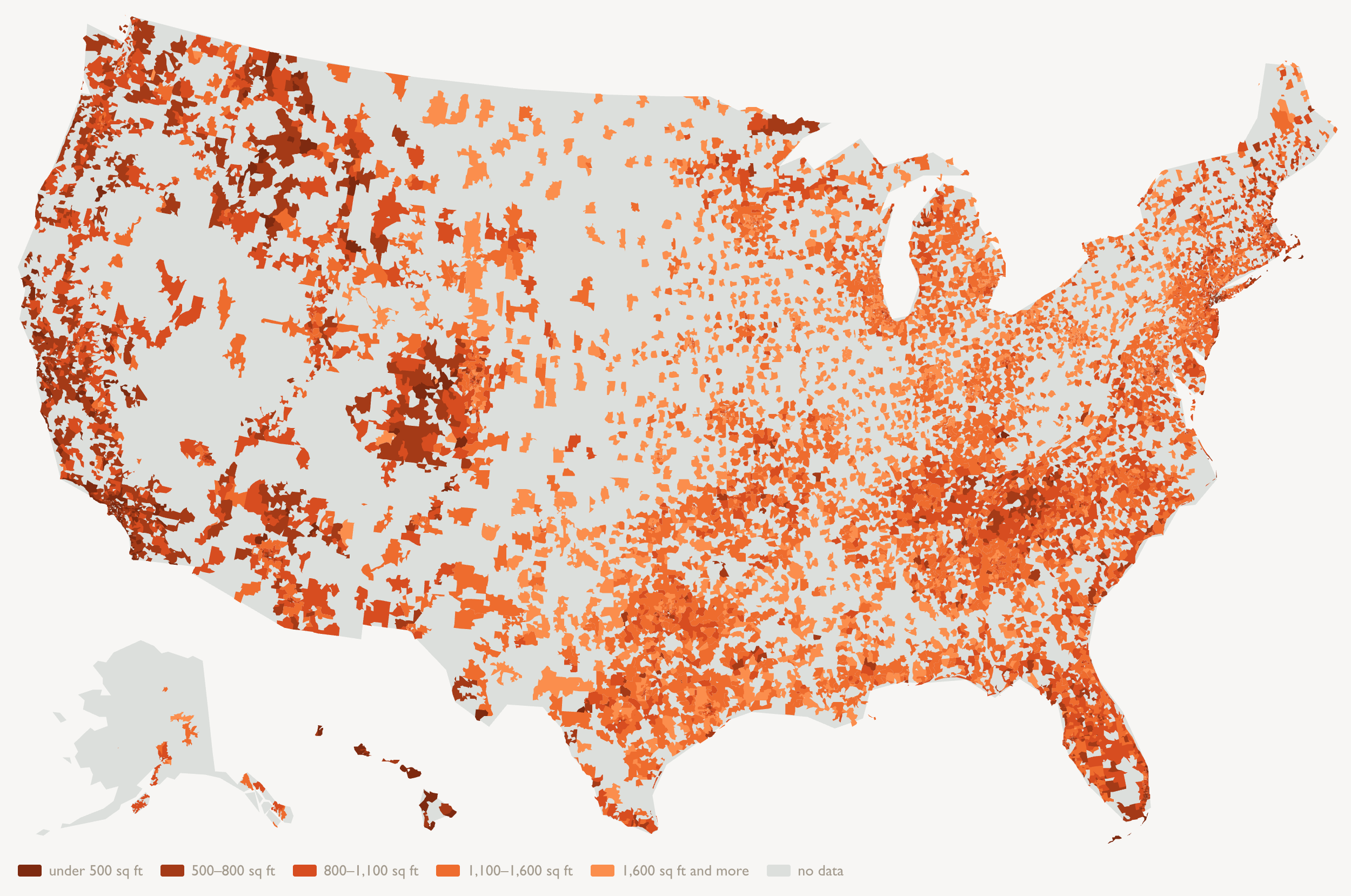
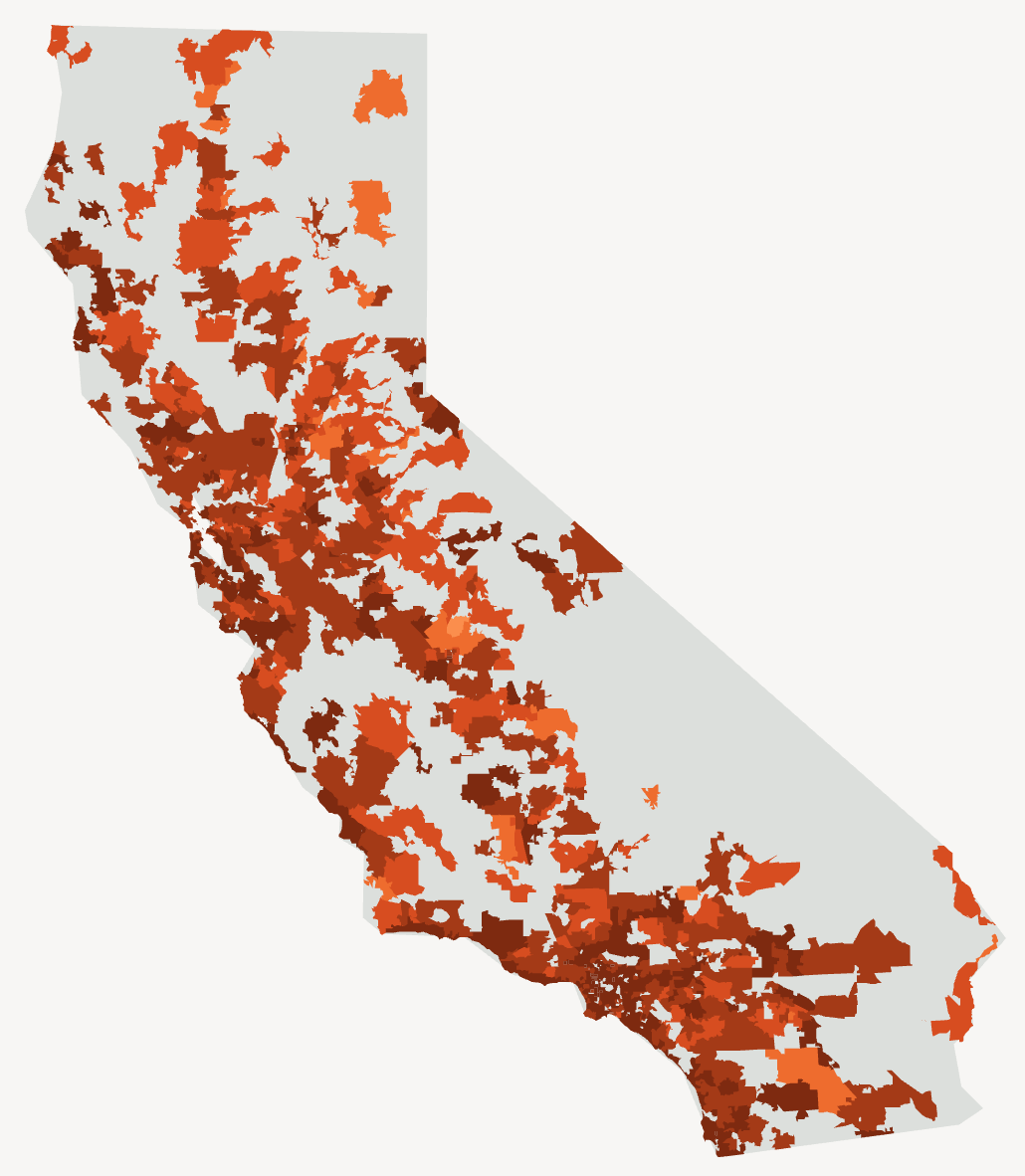
California: 52% of residents live where earnings don’t stretch even to 500 sq ft (at least in 2024)
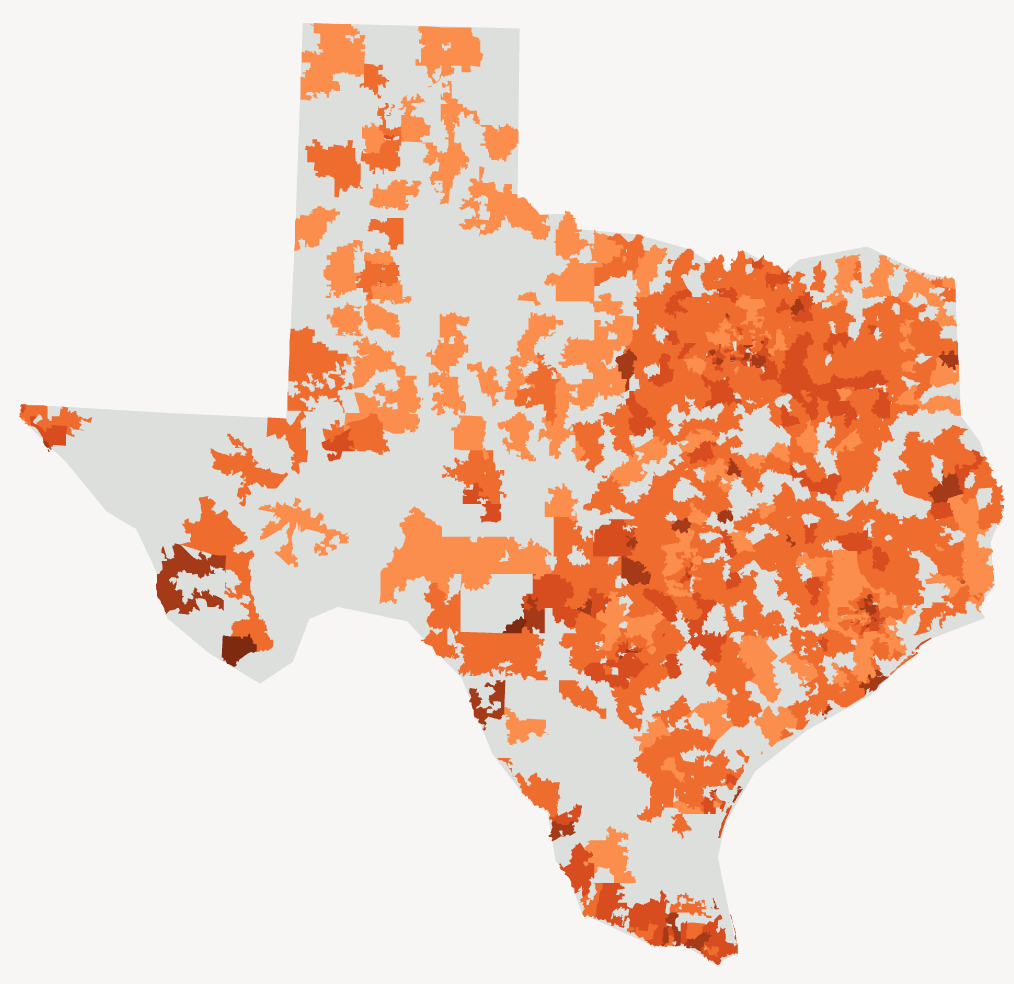
Texas: There are practically no areas with affordability below 500 sq ft — the darker patches are the Austin area and the Mexican border region
Not much of a surprise, huh? At least at first glance.
But you know what? America is a very big country, so let’s try looking at two states that at least the average European knows from pop culture at large: California and Texas. In California 52% of residents live where earnings don’t stretch even to 500 sq ft (at least in 2024); In Texas, on the other hand, there are practically no areas with affordability below 500 sq ft.
What about Silicon Valley?
Again: contrary to what you might expect, it’s not at all worst where housing is most expensive.
In Silicon Valley it comes out to 470 square feet, in San Francisco 490, even though a square foot there costs around $980. Local earnings, however, largely keep up with those prices.
On Hawaii’s Maui, homes are only a bit cheaper, but — since people earn ordinary wages there — it comes out to a pathetic 300 square feet. Manhattan, with the most expensive square feet of any big city, gives you 350 sq ft.
But no American state is as hard as Poland!
The closest is Hawaii: 420 square feet, but 1.4 million people live there. In Poland: 37 million, and the middle of the pack lands at 380 square feet.
Maui in Hawaii, by the way, is the same mechanism that pushes Zakopane, Międzyzdroje, or Sopot to the very bottom here. It’s simply a situation where the price is set by the money of outsiders, who earn a lot more somewhere else.
Take a look at a different kind of chart, too: one where each bar is one hundred percent of residents; the bars are split according to how many square feet one third of a salary will cover.
Well, now we’ve got a foundation built on facts.
Who do you think is hurt more by the punches the housing market throws at our jaws? The Pole or the American?
To find out the answer to that question, join me for the next episode of this fascinating journey!